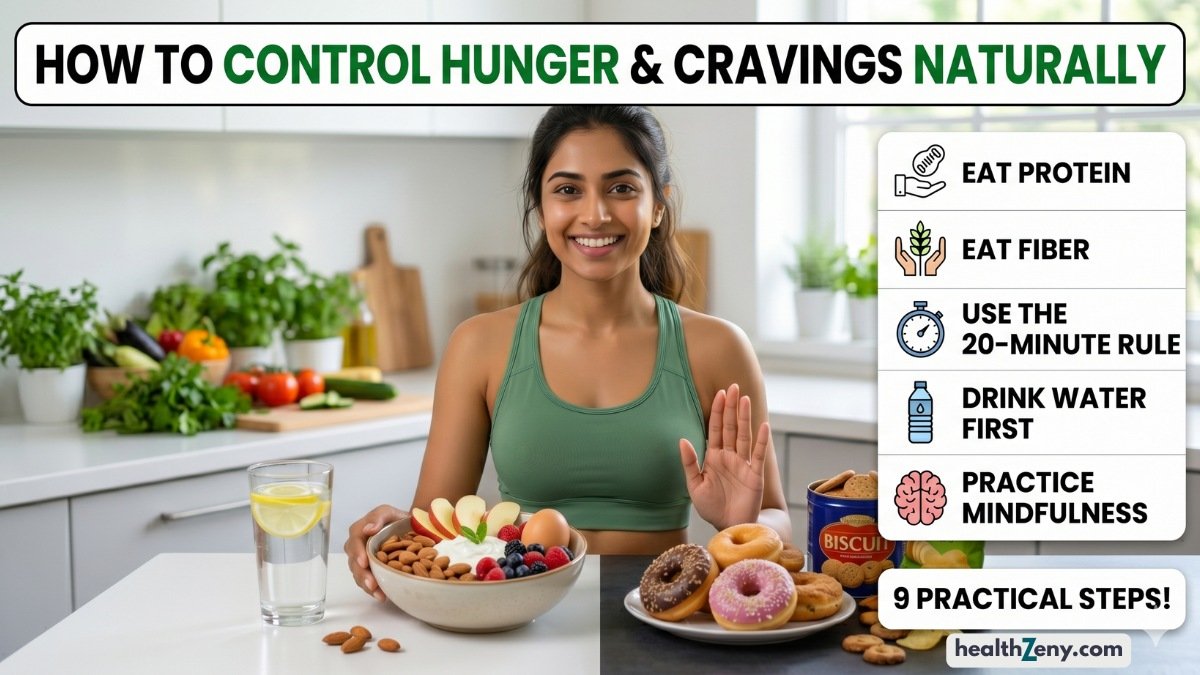
You’ve just finished lunch, yet barely 20 minutes later, your eyes are already fixed on the biscuit tin. Does this sound familiar? You are not alone in feeling this way, and you certainly do not lack willpower.
Hunger and food cravings actually stem from biological signals, stress hormones, and habits formed over years. Learning to naturally manage hunger and cravings is entirely achievable—it requires no strict diets, expensive supplements, or spending your entire day constantly fighting the urge to eat.
This guide presents 9 practical and scientifically proven strategies that you can start adopting today to help reduce hunger and curb your cravings.
- What’ Is the Difference Between Hunger and Cravings?
- 9 Natural Ways to Control Hunger and Cravings
- Tip 1: Eat More Protein at Every Meal :
- Tip 2: Load Up on Fiber-Rich Foods
- Tip 3: Drink Water Before You Eat :
- Tip 4: Get 7–9 Hours of Quality Sleep
- Tip 5: Don't Skip Meals — Plan Them Instead
- Tip 6: Use the "20-Minute Rule" for Cravings
- Tip 7: Practise Mindful Eating
- Tip 8: Manage Stress Actively
- Tip 9: Use Cognitive Reframing for Cravings
- Quick Answer: How to Control Hunger and Cravings Naturally (5-Step Summary)
- Common Mistakes That Make Hunger and Cravings Worse
- A Simple Daily Routine
- Frequently Asked Questions (FAQs)
- Authoritative Sources & References
- Conclusion
What’ Is the Difference Between Hunger and Cravings?
Hunger is a physiological signal from your body indicating that it requires energy (fuel). It builds gradually and can generally be satisfied by most types of food.
Cravings, on the other hand, are an intense desire for a specific food item—typically something sweet, salty, or fatty. These urges stem from emotions, habits, or hormones, rather than from an actual nutritional need.
Understanding this distinction is the first step toward regaining control over yourself. According to doctors at Scripps Health, cravings have very little to do with true hunger. They are more psychological than physiological, which means you have far more power to control them than you might think.
9 Natural Ways to Control Hunger and Cravings
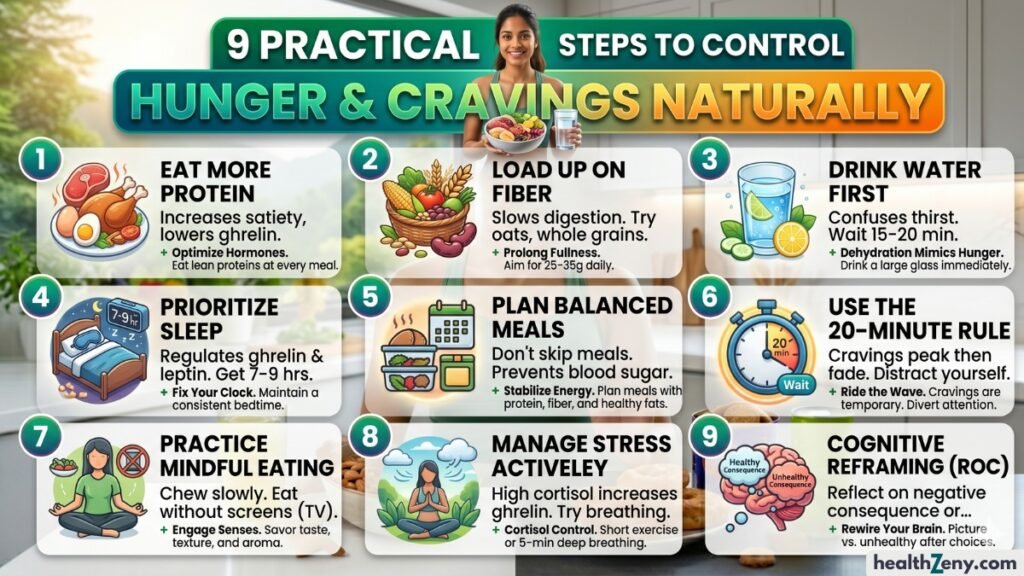
Tip 1: Eat More Protein at Every Meal :
Protein is the most satiating macronutrient. It keeps you feeling full for longer by increasing the levels of satiety hormones such as GLP-1 and Peptide YY while simultaneously lowering the levels of ghrelin, the hormone that signals hunger to your brain.
A simple strategy: include eggs in your breakfast, keep Greek yogurt on hand as a snack, or incorporate grilled chicken or lentils into your lunch. Even a small amount of protein helps curb intense hunger pangs in the afternoon. For easy ideas, try these protein-packed homemade drinks.
Tip 2: Load Up on Fiber-Rich Foods
Dietary fiber slows down digestion, delays the process of gastric emptying, and activates the gut hormones that signal fullness. Foods rich in soluble fiber such as oats, apples, beans, and flaxseeds—are particularly effective for the body.
A simple tip: opt for whole-grain bread instead of white bread, add a handful of beans to your soup, or start your lunch with a fiber-rich salad before the main course.
Tip 3: Drink Water Before You Eat :
Your body often confuses thirst with hunger. Research suggests that drinking water before a meal leads you to consume less food. Whenever you experience a strong urge to eat, drink a large glass of water and wait for 15–20 minutes. Often, this craving will disappear completely.
A simple tip: Keep a water bottle at your desk. Set a reminder to drink a glass of water before every meal.
Tip 4: Get 7–9 Hours of Quality Sleep
Lack of proper sleep directly increases appetite and food cravings. In fact, even a single night of poor sleep causes levels of the hormone ‘ghrelin’ to rise while levels of ‘leptin’ drop. this significantly increases your likelihood of consuming high-calorie and sugary foods the following day.
A simple solution: Establish a fixed sleep-wake schedule—even on weekends—and reduce screen time for 30 to 60 minutes before going to bed. This will not only ensure better sleep but also help keep your mind calm.
Tip 5: Don’t Skip Meals — Plan Them Instead
Skipping meals is not a good practice, as going without food causes your blood sugar levels to drop. This triggers your brain to send urgent signals prompting you to eat—and to eat excessively. Consequently, you often experience intense cravings for high-sugar foods that provide an immediate energy boost. Regular and balanced meals help break this cycle.
A simple solution: Plan your meals and snacks the evening before. Keep small, protein-rich snacks—such as a handful of nuts or a piece of string cheese on hand for emergencies.
Tip 6: Use the “20-Minute Rule” for Cravings
Food cravings typically peak within 15–20 minutes and then gradually subside—provided you don’t act on them immediately. Instead of giving in right away, redirect your attention elsewhere. Go for a short walk, call a friend, or engage in a simple task. By the time you have finished doing these things, your craving will usually have passed.
A helpful tip: The next time you experience a food craving, set a 20-minute timer. Before deciding to eat anything, step outside, get some physical activity, or simply change your surroundings.
Tip 7: Practise Mindful Eating
Peer-reviewed studies have demonstrated that mindfulness-based techniques significantly reduce intense food cravings. In particular, regarding the habit of eating due to stress or emotional triggers—when you eat with full concentration, you consume less and feel more satisfied.
A practical step: Eat without any screens (such as a phone or TV). Chew every mouthful thoroughly, set down your fork between bites, and focus on the taste and texture of the food. Even eating without any interruptions for just 10–15 minutes makes a noticeable difference.
Tip 8: Manage Stress Actively
Stress triggers the release of cortisol, which increases ghrelin levels and activates the brain’s dopamine reward system—making the craving for comfort food almost uncontrollable. Regularly managing stress breaks this cycle.
A simple remedy: Whenever stress levels spike, practice deep breathing for 5 minutes (inhale for a count of 4, hold for 4, and exhale for 6). Regular exercise and spending time outdoors also directly lower cortisol levels.
Tip 9: Use Cognitive Reframing for Cravings
Research from the PMC (NIH) suggests that consciously reflecting on the negative consequences of consuming unhealthy food or, conversely, on the positive benefits of eating healthily- can reduce cravings and influence dietary choices. This strategy is known as the Regulation of Craving (ROC), and it truly works.
Practical Step: When you feel the urge to eat something unhealthy, tell yourself: “If I eat this, I will feel sluggish in 20 minutes.” Then, consider how you would feel after choosing something nutritious instead. For more, follow the golden rules of healthy eating.
Quick Answer: How to Control Hunger and Cravings Naturally (5-Step Summary)
- Eat a high-protein, high-fibre meal at regular intervals – never skip meals.
- Drink a large glass of water immediately when a craving strikes, then wait 20 minutes.
- Prioritise 7–9 hours of sleep every night to keep hunger hormones balanced.
- Manage stress daily – even 5 minutes of deep breathing lowers cortisol and craving intensity.
- Practise mindful eating at every meal: no screens, full attention, slow chewing.
Common Mistakes That Make Hunger and Cravings Worse
Skipping breakfast : Sets off a blood sugar rollercoaster that makes afternoon cravings almost inevitable.
Drinking fruit juice instead of eating fruit : Juice removes fibre and spikes blood sugar fast, increasing cravings within an hour.
Labelling foods “forbidden” : Research shows restriction triggers obsessive thoughts about banned foods. Moderation beats elimination.
Eating while distracted : Eating in front of screens is strongly linked to overeating and missing satiety signals.
Relying on willpower alone : Cravings are driven by hormones and brain chemistry. You need strategy and environment design, not just discipline.
Going too long without water : Mild dehydration is one of the most common hidden causes of unnecessary snacking.
A Simple Daily Routine
to Control Hunger and Cravings Naturally
Frequently Asked Questions (FAQs)
Authoritative Sources & References
Conclusion
Learning to control hunger and cravings naturally is not about perfection. It’s about understanding the signals your body sends and making small, consistent changes that add up over time.
Start with just one tip this week. Maybe it’s drinking a glass of water before lunch. Maybe it’s getting to bed 30 minutes earlier. Each small win builds momentum.
Your body isn’t working against you. Once you give it the right signals protein, fibre, sleep, hydration, and calm it naturally starts to hunger less and crave smarter. Be patient with yourself, and know that every step in the right direction counts.
⚕️ Medical Disclaimer: This article is for informational and educational purposes only. It is not intended as medical advice, diagnosis, or treatment. Always consult a qualified healthcare professional or registered dietitian before making significant changes to your diet, especially if you have any underlying health conditions.

