
There is absolutely no need for you to panic. When you decide that you want to lose 5 kg in a single month, you may find yourself feeling a mix of both motivation and anxiety. Perhaps there is a wedding coming up this month or marked on your calendar or maybe summer is just around the corner. alternatively, you might simply be tired of feeling uncomfortable in your own body.
I have been through this phase myself and I know just how tempting it is to search for “quick fixes” or crash diets that make grandiose promises.
The truth is, losing 5 kg in 30 days is absolutely possible. However, doing so in a safe manner-without wrecking your metabolism, losing muscle mass, or regaining the weight later– requires a much more sensible approach.
This guide is designed for those who are just starting out. It involves no complicated science. There are no expensive meal plans. Just a few genuine, practical steps that work for anyone, anywhere.
Is losing 5 kg in one month really safe?
Yes, provided you go about it the right way.
Health experts generally recommend losing between just starting out. of weight per week. Based on this, losing 5 kg in four weeks translates to shedding approximately 1.25 kg per week. While this falls slightly above the range typically recommended by health experts, it is an achievable goal through consistent effort and sheer determination.
Simply put, the key lies in creating a “calorie deficit“—that is, burning more energy than you consume, all without starving yourself. While crash diets may yield rapid results on the weighing scale, the weight lost typically consists mostly of water and muscle mass. Consequently, the moment you stop dieting, the weight tends to return and often, it comes back even faster than before.
Our objective is to help you achieve sustainable, long-term fat loss. So, let’s explore exactly how to make that happen.
7 Practical Tips to Lose 5kg Safely
Prioritize Protein at Every Meal:
Protein is your best friend when it comes to weight loss. It helps you feel full and satisfied, stabilizes blood sugar levels, and aids in preserving muscle mass while you shed fat.
What a Protein-Rich Meal Looks Like
Protein keeps you full, fuels your muscles, and helps you burn more calories.
- Eggs (any style)
- Greek yogurt
- Protein smoothie
- Grilled chicken
- Fish (salmon, tuna)
- Tofu or tempeh
- Lentils (dal, masoor)
- Similar to lunch
- Keep protein as centerpiece
- Pair with vegetables
- A handful of almonds
- Cottage cheese (paneer)
- Hard-boiled egg
When you make protein the focal point of your meals, you naturally consume fewer calories without ever feeling deprived.
Fill Half Your Plate with Vegetables
This is the easiest habit you can adopt.
Vegetables are low in calories but high in fiber and water. They physically fill your stomach, sending a signal to your brain that you are full.
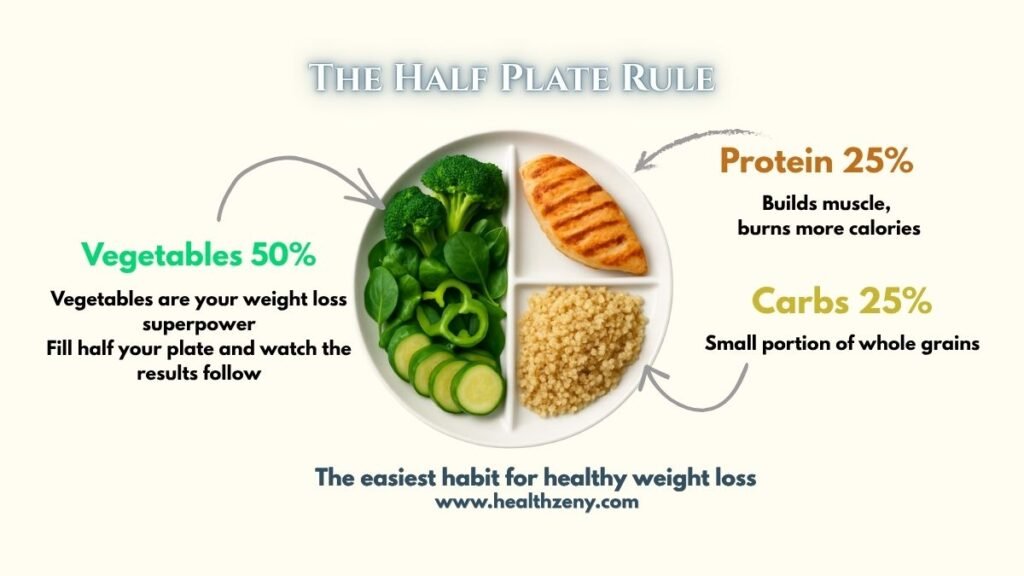
Try This:
– At lunch and dinner, ensure that half of your plate is filled with non-starchy vegetables—such as broccoli, spinach, bell peppers, zucchini, or salad greens.
– The remaining half of the plate should be divided between protein and a small portion of carbohydrates (such as rice, quinoa, or sweet potatoes).
You won’t feel like you’re dieting. You will simply feel satisfied.
Cut Out Liquid Calories
This is where many people unknowingly sabotage their fat loss journey. A single sugary coffee drink can contain 300–400 calories. A can of soda adds another 150 calories. Even a glass of “healthy” fruit juice contains 30g of sugar; it is best to steer clear of all of these.
For the next 30 days, consume only the following:
– Water (if plain water bores you, try adding lemon, cucumber, or mint)
– Black coffee or tea
– Sparkling water
– Herbal tea
If you drink alcohol, keep in mind that it slows your metabolism and lowers your willpower- making it much easier to overeat. Consider taking a break from alcohol for this month.
4. The Habit of Walking More:
You don’t need a gym membership to lose weight. Walking is one of the most underrated methods for weight loss—especially for beginners.
Nowadays, almost everyone owns a smartwatch. But even if you don’t have one, you can still track your progress using your phone or simply by timing your walks. Aim to walk between 8,000 and 10,000 steps every day. Depending on your body weight and walking pace, this burns approximately 200–400 extra calories.
Some simple ways to increase your step count:
– Park your car a little further away from the store entrance.
– Take the stairs instead of the elevator.
– Pace around while talking on the phone.
– Go for a 20-minute stroll after dinner (Bonus: This improves digestion and reduces stress).
Walking is an easy, sustainable, and effective method that yields visible results relatively quickly. Within just a few days, you will begin to feel more energetic and agile; gradually, try to push yourself to walk even more steps than your initial target.
5. Good Sleep: The Secret to True Health
Biologically speaking, if you sleep for less than six hours, your body begins to gradually accumulate fat. Poor sleep leads to elevated levels of cortisol (the stress hormone) and ghrelin (the hunger hormone) in the body, while leptin (the hormone that signals satiety) decreases.
In short: you feel hungrier, and excess fat continues to accumulate around your midsection.
In today’s stressful world, getting a restful night’s sleep has become absolutely essential; aim for 7–8 hours of quality sleep every night. This alone can make a significant difference in both your energy levels and your appetite.
6. Drink Water Before Meals
This is a simple strategy, yet one that people often overlook. Research suggests that you should drink a glass of water 20 minutes before a meal. Conversely, drinking a large amount of water immediately after eating can weaken your digestive power.
This helps fill your stomach slightly, causing you to consume less food during your meal. Over the course of a month, this small reduction in calorie intake adds up significantly.
Aim to drink 2–3 liters of water every day. If you feel hungry outside of your regular meal times, drink some water first; sometimes, thirst simply masquerades as hunger.
7. Engage in Strength Training Twice a Week:
In addition to walking, try to incorporate strength training into your weekly routine. Cardio burns calories, but strength training changes your body composition. Even at rest, muscles burn more calories than fat. Furthermore, engaging in strength training gradually transforms your body’s physique.
Even while at rest, muscles burn more calories than fat. Aim for just two strength training sessions per week such as bodyweight exercises, resistance band workouts, or light weightlifting. By incorporating this into your daily routine, you can boost your metabolism and help prevent muscle loss while dieting.
An Easy Routine to Do at Home:
– Squats: 3 sets of 12 reps
– Push-ups (or Knee Push-ups): 3 sets of 10 reps
– Lunges: 3 sets of 10 reps per leg
– Plank: 3 sets of 30 seconds
Completing this entire routine may take around 20 minutes, and following it up with 10 minutes of yoga or meditation can help revitalize your body.
Common Mistakes to Avoid
– Skipping Meals: Skipping meals in an attempt to lose weight, only to end up overeating later, is counterproductive. Stick to regular, balanced meals instead.
– Weighing Yourself Daily: You should not weigh yourself every day, as your weight naturally fluctuates due to factors such as water retention, hormonal changes, and digestion. Instead, weigh yourself once a week, ideally at the same time of day.
– Completely Eliminating Carbs: Carbohydrates are not your enemy; however, refined carbs (such as white bread and sugary snacks) can be. On your weight loss journey, make sure to incorporate whole grains and green vegetables into your diet.
– Not Eating Enough: Drastically cutting down on food intake in an effort to reduce calories is detrimental to your body. Doing so can slow down your metabolism. Rather than starving yourself, aim for a moderate reduction in your calorie intake.
An Easy Daily Routine to Follow
If you are trying to lose weight, you should easily be able to adopt this routine:
A glass of water, followed by a protein-rich breakfast (eggs or Greek yogurt).
A 15–20 minute walk.
Half a plate of vegetables, one-quarter protein, and one-quarter carbohydrates.
If you feel hungry, have some nuts or fruit.
A 20-minute strength workout or a walk.
Just like lunch—emphasize protein and vegetables.
No screens for 30 minutes prior to sleep; aim for 7–8 hours of sleep.
Frequently Asked Questions
Final Thoughts on Weight Loss
Losing 5 kg in a single month is indeed a challenge, but it is a goal you can absolutely achieve safely and without any undue difficulty. This isn’t about following a magic diet or engaging in grueling workouts rather, it is simply a matter of cultivating consistent habits.
These daily practices such as incorporating protein into your meals, ensuring your plate includes vegetables, walking more, getting adequate sleep, and staying hydrated are all it takes to shed weight. You don’t need to be absolutely perfect the key is simply to keep moving forward.
You can start gradually today, there is no need to wait for the next month or the next Monday to begin. By taking action now, you will thank yourself in the future.

